
Keynote Speaker

Dr. Ojas Parekh
Sandia National Laboratories · Talk Title TBA
Abstract: Ojas will discuss an interesting problem in applied mathematics.
Bio: Ojas Parekh is a co-director of the Quantum Algorithms and Applications Collaboratory (QuAAC) at Sandia National Laboratories, thrives in interdisciplinary work, and has published in a variety of fields including discrete optimization, theoretical computer science, combinatorics, combinatorial scientific computing, and most recently, quantum and neuromorphic computing. He has enjoyed helping to shape the emerging fields of quantum optimization and quantum approximation algorithms. Parekh directs the Department of Energy Fundamental Algorithmic Research towards Quantum Utility project ( http://far-qu.sandia.gov ), a multi-institutional effort tasked with designing novel quantum algorithms to realize advantages over classical computation, especially for optimization, simulation, and machine learning.
Career Panel Speakers

Dr. Danny Dunlavy
Sandia National Laboratories
Bio: Danny Dunlavy is a Distinguished Member of the Technical Staff in the Center for Computing Research at Sandia National Laboratories in Albuquerque, New Mexico. He received an M.S. in Applied Mathematics from Western Michigan University in 2001 and a Ph.D. in Applied Mathematics and Scientific Computation from the University of Maryland, College Park in 2005. His research focuses on mathematical and computational methods for analyzing complex, high-dimensional data. His interests include matrix and tensor decompositions, tensor regression models, graph and hypergraph algorithms, numerical optimization, numerical linear algebra, machine learning, data science, text analysis, software security, and cybersecurity. Currently, he serves as the Vice Chair of the Southwest Section of SIAM.
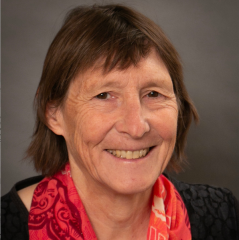
Dr. Rosemary Renaut
Arizona State University
Bio:
Professor Renaut was educated in the UK, receiving a B.Sc Honors (1st class)
in mathematics from the University of Durham in 1980 and a PhD in Applied Mathematics
from the University of Cambridge in 1985. Before arriving in the US for a position as
an Assistant Professor at Arizona State University (ASU), she held a postdoctoral position
at the Technical University in Aachen (RWTH) and a research scientist position at the
Christian Michelsen Institute in Bergen, Norway. AT ASU she moved through the ranks and
was Chair of the then Department of Mathematics and Statistics from 1997-2001. Sabbaticals
have been spent at the Technical University of Munich, Technical University of Kaiserslautern,
ETH Zurich, Charles University in Prague and at Oxford University. Covid prevented the planned
visit to Wuhan China during the 2020 sabbatical period! As a researcher and teacher, she has
enjoyed mentoring several graduate students, mainly toward a goal of a non academic position.
Notably, Youzuo Lin, originally at Los Alamos for many years post graduation is now at Chapel
Hill as an Associate Professor, and Jodi Mead is a Professor at Boise State. Other student
destinations include Mayo Clinic Phoenix, research in Utah, and a recent graduate is now a
pilot in the Air Force Reserves! She has also spent almost 6 years at the National Science
Foundation as a program office for computational mathematics and currently resides in Rio
Rancho while working remotely at ASU.
Rosemary Renaut’s recent research is focused on the design and analysis of computational
algorithms for solving problems arising mainly in medical and geophysical applications. In
particular, the commonality between these apparently disparate disciplines is the need to infer
physical information, say about the Earth substructure or an internal organ such as the brain,
from measurements that are taken relating to a model of a physical situation. In the geophysics
situation this might be gravity survey measurements taken on the surface over an area in which
one expects to find a variable subsurface structure, characterized by different density values.
This situation typifies many of the challenges associated with effectively and solving inverse
problems, namely that the sample size is typically small in relation to the required number of
parameters, that the data are often corrupted by noise, and that the underlying model is
ill-posed.
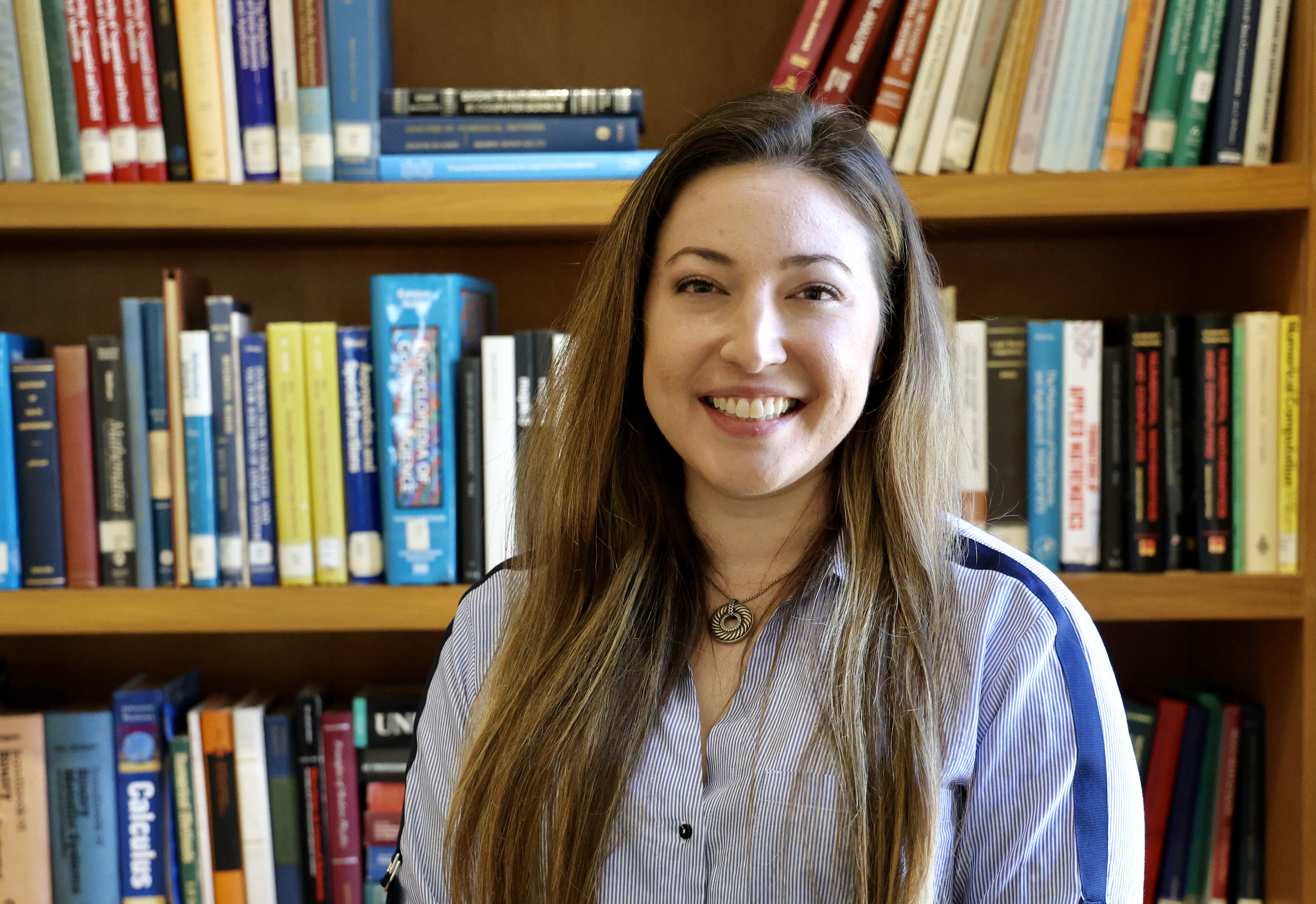
Dr. Katherine Pearce
University of New Mexico
Bio: Kate Pearce received her Ph.D. in Applied Mathematics from North Carolina State University, where she used algorithms in numerical linear algebra to identify mathematical model parameters that can be estimated reliably from real data. She then received a Peter O’Donnell postdoctoral research fellowship to work with Per-Gunnar Martinsson at the Oden Institute at the University of Texas at Austin on randomized algorithms in numerical linear algebra for scientific computing and data science. She was also subsequently awarded an NSF MPS-ASCEND postdoctoral fellowship for this research. She is now an Assistant Professor of applied mathematics and data science at UNM.
SWAM Speakers
The students across the southwest...
Blake Bates
University of Arizona · Topological Signal Processing: an Alternative Perspective
Abstract:
Topological data analysis offers a different way to study time series by focusing on
the geometry produced by a signal rather than only its behavior in the time or
frequency domain. A common approach is to construct a sliding window embedding,
which turns a one-dimensional signal into a point cloud whose shape reflects properties
of the underlying dynamics. Methods such as SW1PerS use persistent homology to measure
loop structure in these embeddings and provide a topological description of periodic behavior.
In this talk, I will discuss how the topology of sliding window embeddings can also reflect
classical spectral properties of a signal. For periodic signals, features of the frequency
content influence the geometry of the embedding and, in turn, its persistent homology. These
topological summaries can then be used as inputs to machine learning models to recover spectral
properties of the original signal. This suggests that frequency information is encoded, at
least in part, in the topology of the embedding and raises broader mathematical questions about
exactly what spectral information is preserved and why.

José García
University of New Mexico · Quadratic Composite Operator and its Application to Non-Hermitian Physics
Abstract: In some physics settings, including Quantum Mechanics there is an underlying operator that defines a differential equation modeling a system. For physical reasons, it is assumed to be Hermitian. However, this requirement has been loosened to allow for non-Hermitian operators, or in finite dimension the matrix representation. This is a result of wanting to model a system that can lose information to the environment. To this end we investigate the role of a generalization of the quadratic composite operator construction first introduced by A. Cerjan, T. Lorin, and F. Vides. We will explore how the quadratic composite operator connects with non-Hermitian problems with an emphasis on approximate joint eigenvectors and how they evolve over time.
Bio: José J. García is a PhD candidate in the Department of Mathematics and Statistics at the University of New Mexico. His research focuses on the development of mathematical and computational methods for problems in quantum mechanics, condensed matter physics, and network science. Over the past six years, he has conducted research while teaching undergraduate mathematics courses ranging from Calculus and Linear Algebra to Ordinary Differential Equations. Collaborations with researchers at Sandia National Laboratories has led to the ongoing investigation of composite operator frameworks for quantum systems and real-space approaches to the characterization of topological materials. Additionally, he assists in developing graph sparsification methods for community detection in large-scale networks.
Heng Wu
University of Arizona · Threshold-Dependent Immune Recognition Shapes Mutation-Frequency Patterns in Tumor Evolution
Abstract: As tumors grow, their cells accumulate mutations, some of which generate altered peptides called neoantigens that can be recognized by the immune system. Immune recognition can suppress cells carrying these mutations, potentially leaving detectable signatures in tumor genetic diversity. One way to search for such signatures is to compare the numbers of neoantigenic and other mutations across cancer cell fraction, the fraction of tumor cells carrying a given mutation. How immune recognition shapes this count ratio remains difficult to predict because mutation, cell growth, and recognition are stochastic, and selection can affect only part of a mutation's descendant population. We investigate a threshold model in which a neoantigen-bearing lineage becomes eligible for immune recognition only after reaching a specified size. Recognition then occurs after a stochastic waiting time and reduces the lineage's net growth rate. Stochastic tumor-evolution simulations reveal an unexpected pattern: the neoantigenic-to-background mutation count ratio can exhibit local enrichment followed by depletion as cancer cell fraction increases, despite selection acting against neoantigen-bearing cells. To explain this pattern, we develop a mutation-centered mean-field approximation that accounts for recognition of the focal neoantigen, selection arising in subsets of its descendants, and mutations born in already selected lineages. We derive integral expressions for expected mutation carrier masses and transform mutation supply from birth time into cancer cell fraction. The resulting count ratio separates, where the maps are one-to-one, into relative mutation supply and a Jacobian factor. This decomposition explains how selection can compress mutations born at different times into a narrow range of final fractions, producing local enrichment. We examine how recognition rate, selection strength, and detection threshold shape this effect. Future comparisons with tumor-sequencing data will test whether these predicted patterns capture signatures of immune selection in human tumors.
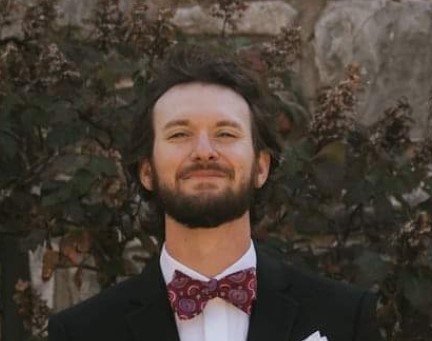
Christopher Martin Mount
University of Arizona · Sampling Sticky Brownian Motion and its Local Time
Abstract: We develop exact sampling algorithms for reflected sticky Brownian motion and symmetric sticky Brownian motion, jointly with their local-time coordinates. For reflected sticky Brownian motion, we factor the joint position–local-time transition law into elementary random draws. Each one-step sample requires one Gaussian random variable and, depending on the case, at most one uniform and one exponential random variable. Symmetric sticky Brownian motion is then obtained by adding at most one independent fair Bernoulli sign. Iterating the one-step construction produces exact samples from the joint finite-dimensional distributions along any given increasing sequence of observation times.
Bio: Chris Mount is a PhD student in mathematics at the University of Arizona, working with Professor Fatkullin. His research is in stochastic processes, with a current focus on exact simulation of sticky Brownian motion, both forward in time and conditioned on its endpoints.

Daniela Lezcano Cuello
New Mexico Institute of Mining and Technology · Bistability Dynamics of Leishmaniasis Prevalence
Abstract: In this work, we construct a mathematical model based on a system of differential equations to explain American Cutaneous Leishmaniasis data across different health areas of Panama. We prove that the model exhibits bistable dynamics and, in particular, undergoes a backward bifurcation. We derive the exact parametric conditions responsible for this behavior and provide numerical simulations to support our theoretical analysis.
Bio: Daniela Lezcano Cuello is a mathematician from Montelíbano, Córdoba, Colombia, currently pursuing an M.S. in Mathematics at the New Mexico Institute of Mining and Technology (NMT). Her journey into mathematics began with a fascination for prime numbers and their enduring mysteries. Today, immersed in applied mathematics, she has discovered a new universe, one in which mathematics becomes a way to explore the world, understand the complexity of nature, and translate real-life phenomena into equations, numbers, and parameters. Her current research focuses on ordinary differential equations and mathematical modeling in ecology. Beyond research, she is passionate about mathematics education and STEM outreach, believing that curiosity can turn questions into discoveries and that mathematics offers a powerful language for understanding the world around us.
Raghav Agrawal
University of New Mexico · Adjoint-Based Quantity-of-Interest Error Estimation for Fluid-Structure Interaction Problems
Abstract: A popular numerical technique for solving Partial Differential Equations (PDEs) is the mesh-based Finite Element Method. The domain is partitioned into elements of finite (non-infinitesimal) size, resulting in a "mesh". Sometimes, we want to estimate a certain quantity when we numerically solve PDEs. This "Quantity of Interest" (QoI) can often be expressed as a linear functional of the PDE solution. This formulation naturally lends itself to adjoint-based error analysis, where we solve an adjoint problem to estimate the error in the numerically calculated QoI. It also determines which regions in the domain contribute most to the error. This information allows "adaptive refinement" of the mesh, which reduces the error more efficiently than uniform refinement. In this talk, I'll discuss how adjoint-based error analysis can be applied to Fluid-Structure Interaction Problems.
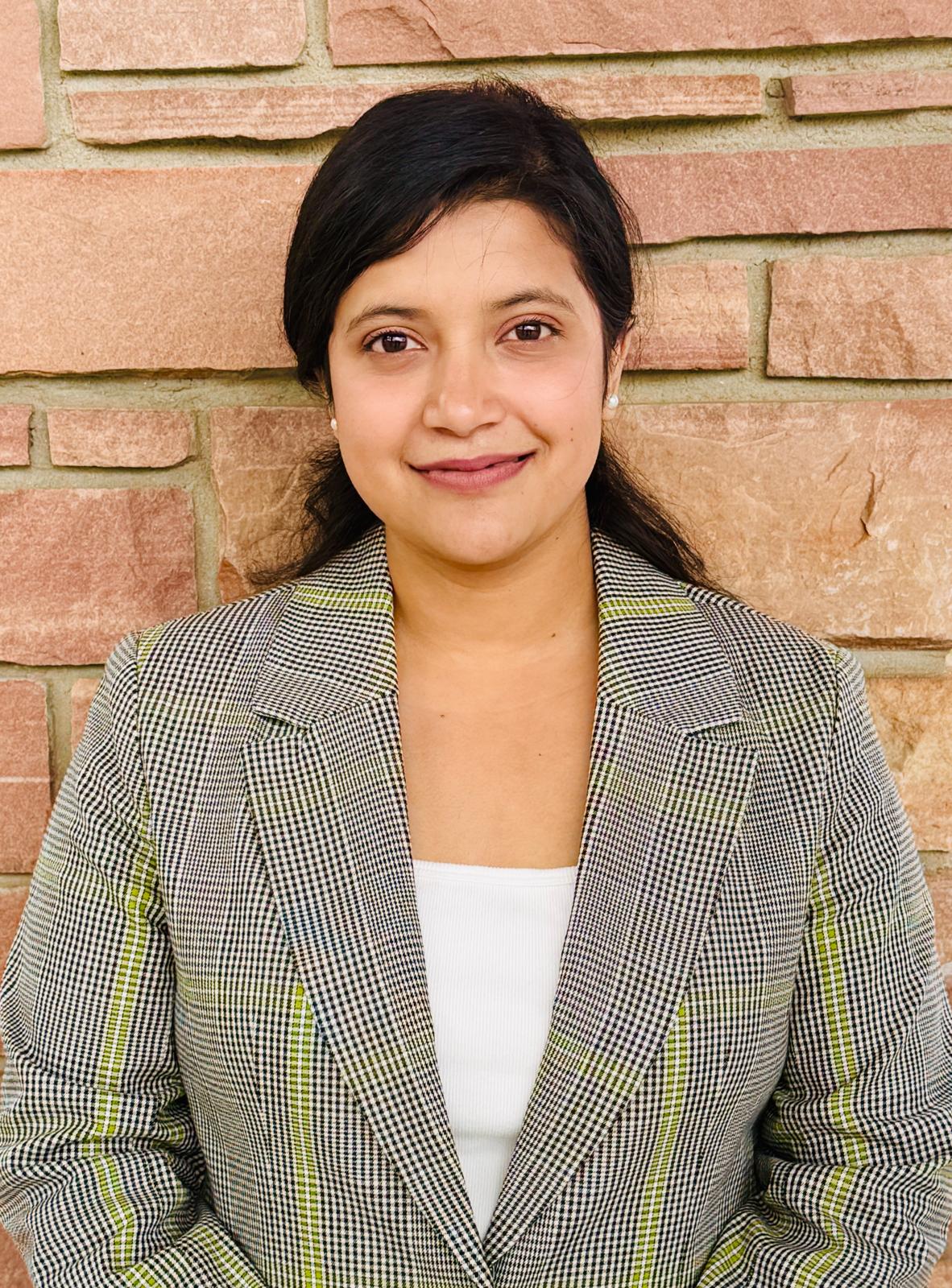
Sujata Ghimire
University of New Mexico · Micropolar Continuum Modeling of Microstructured Materials: A Finite Element Approach
Abstract:
Materials with an underlying microstructure can exhibit mechanical behavior
that is not fully captured by classical continuum mechanics, particularly when
the characteristic size of the microstructure becomes comparable to the length
scale of the problem. This limitation is especially relevant to biological
materials such as bone, where a complex heterogeneous microstructure can
lead to size-dependent behavior and localized deformation. Micropolar, or
Cosserat, continuum theory offers a way to account for these effects by
introducing independent microrotations, couple stresses, and an intrinsic
material length scale into the continuum description.
This work focuses on developing a finite element framework to study the
static and dynamic behavior of linear micropolar continua. The framework
considers both two- and three-dimensional formulations under static and
dynamic conditions, with the numerical models implemented in MATLAB. In
addition to the usual translational degrees of freedom, independent rotational
degrees of freedom are included to represent the micropolar response. The
numerical formulation is examined through patch tests, benchmark problems,
and comparisons with analytical solutions where available, allowing the
implementation to be checked under different loading conditions and problem
settings.
The dynamic behavior of the micropolar continuum also motivates the study
of wave propagation and dispersion. Dispersion analysis can be used to explore
how microrotation, micropolar material parameters, and the intrinsic length scale
affect the relationship between wave frequency and wavelength. This provides a useful
link between the mathematical description of a micropolar continuum and the physical
influence of the underlying material structure. The overall goal is to develop a
computational framework that can capture size-dependent behavior in microstructured
materials, with particular interest in its future application to bone.
Bio: Sujata Ghimire is a Ph.D. student in Civil Engineering with a concentration in Structural Engineering at the University of New Mexico. Sujata’s research focuses on computational mechanics, continuum mechanics, and finite element modeling, particularly micropolar (Cosserat) continuum theory and microstructured materials. Current research involves the development of finite element formulations for static and dynamic analysis of micropolar continua, with future applications to understanding size-dependent behavior in biological materials such as bone.
Chrisantus Bongbeebina
University of New Mexico · Bayesian Dynamic Borrowing with Power Priors: Comparing Adaptive Choices of the Historical Discount Parameter
Abstract:
Bayesian power priors let us use historical data without giving it full weight. That can improve
precision and power, but deciding how much to borrow is not straightforward. A fixed
discounting weight cannot adjust when the historical and current data disagree. A fully Bayesian
approach can adapt to the weight, but then the final amount of borrowing is driven by the data
and may be less predictable in advance. This raises a practical question: how should the
discounting parameter be chosen so that borrowing increases when the two data sources agree
and decreases when they conflict? Recent studies have also shown that normalized power-prior
weights can behave in unexpected ways under conflict, and that common Beta priors may lead to
different borrowing patterns from priors chosen using explicit loss-based criteria.
We compare several ways of determining the amount of historical borrowing and examine how
they behave as conflict between the historical and current data increases. The simulation uses a
simple Normal-Normal model with one fixed current sample size, three historical sample sizes,
and several levels of disagreement between the two sources.
We compare no borrowing, full borrowing, a fully Bayesian random-weight power prior, and
four data-adaptive guide-value methods based on the Deviance Information Criterion, log
pseudo-marginal likelihood, marginal likelihood, and a penalized likelihood criterion. We assess
the methods using the amount of historical information borrowed, effective historical sample
size, bias, root mean squared error, posterior standard deviation, 95% credible interval coverage,
and interval width. We also examine how sensitive the results are to different priors on the
discount parameter and different baseline priors on the model mean.
The main question is how much historical information should be borrowed. Historical data can
be useful when they are consistent with the current data, but their influence should be reduced
when the two sources begin to disagree. By looking at both the amount of borrowing and the
quality of the resulting inference, the study provides a practical way to compare different power-
prior borrowing rules.
Collin Kilmer
Arizona State University · Effects of Dispersal on Stability and Abundance in a Two-Patch Tribolium Confusum Model
Abstract: The effects of dispersal on a population can be either stabilizing or destabilizing depending on the local dynamics of the coupled populations. We investigate this by extending the continuous-time larvae–adult (cLA) model proposed by Brozak et al., with the pupal delay set to zero, to two identical habitat patches connected by linear, symmetric adult dispersal. We demonstrate that dispersal neither stabilizes nor destabilizes the metapopulation, and does not alter equilibrium abundance; it only affects the rate of decay of population differences between patches. This is demonstrated through theoretical analysis and numerical simulations, and preliminary results from ongoing empirical trials are also supportive. These findings suggest that in Tribolium confusum populations, the demographic consequences of dispersal are transient, not asymptotic.
Bio: Collin Kilmer works in mathematical biology, specifically population ecology. He has a Bachelor's in Mathematics from Southern Adventist University and a Master's in Mathematics from the University of Tennessee at Chattanooga where his thesis focused on zoonotic disease transmission by modeling the ecological and epidemiological mechanisms simultaneously. His current focus is a PhD in Applied Mathematics at Arizona State University working with Dr. Yang Kuang and Dr. John Nagy.
Farnaz Salehi Kolahi
University of New Mexico · Connecting Cosserat Continuum Mechanics with Timoshenko Beam and Rigid-Body Spring Models for Generalized Lattice Formulations
Abstract:
Lattice models provide a discrete representation of continuum materials
in which the effective mechanical response is governed by both the lattice
geometry and the mechanical behavior of individual members. Depending
on the formulation, these members may be represented by normal, shear,
and rotational springs or by beam elements incorporating axial, bending,
and shear deformation. Although these approaches can reproduce a range of
effective elastic behaviors, properties such as the effective Poisson’s ratio
can be constrained by the selected lattice geometry and member parameters.
Existing studies have introduced additional interactions, cell-level
coupling, or corrective forces to overcome these limitations; however,
these modifications are generally specific to individual lattice formulations.
This motivates the development of a more general framework for describing different
lattice models within a consistent mechanical formulation.
In this work, Cosserat continuum theory is investigated as a basis for developing
such a framework. Unlike classical elasticity, Cosserat theory introduces independent
microrotation in addition to displacement, together with asymmetric force stress,
couple stress, and curvature. These additional quantities provide a continuum description
that can be connected to the mechanics of discrete lattice members. The present study
focuses on establishing this connection with Timoshenko beam theory and rigid-body spring models.
To establish the correspondence with Timoshenko beam theory, the full three-dimensional
linear isotropic Cosserat equations are first formulated and then reduced under one-dimensional
assumptions. The resulting equations contain coupled translational and rotational fields with a
mathematical structure similar to the displacement-rotation equations of Timoshenko beam theory.
The coupled equations are reduced to comparable fourth-order differential equations, and their
coefficients are matched to identify relationships between the parameters of the two theories.
The same approach will be extended to rigid-body spring models by considering their normal, shear,
and rotational interactions.
The resulting relationships provide a foundation for developing lattice models based on a
consistent continuum framework. The next stage of this work will incorporate the identified
parameters into discrete lattice formulations and evaluate their effective mechanical response,
with particular attention to the attainable range of Poisson’s ratio. Overall, this work aims to
connect Cosserat continuum mechanics with beam- and spring-based lattice models and provide a
systematic framework for developing generalized lattice formulations.
Anwar Khaddaj
Arizona State University · A Computational Workflow to Inverse Problems in Electrical Impedance Tomography
Abstract: Electrical impedance tomography (EIT) is a portable, non-invasive, and relatively cheap medical technique for imaging electrical conductivity distributions within the human body. One of its important applications is the detection of intra-abdominal hemorrhage in trauma patients. Traditionally, inverse problems are studied to reconstruct the internal conductivities given voltage measurements on boundary surface electrodes. However, the inverse problem is ill-posed and highly sensitive to breathing and other motion, causing artifacts in reconstructed images. In this talk, we first present an extended parametric partial differential equation (PDE) for EIT accounting for boundary shape and internal conductivities and then apply a collocational approach based on generalized polynomial chaos to construct a polynomial approximation of the forward solution in the parameter space. Having that surrogate polynomial allows us to efficiently solve the inverse problem using Tikhonov and other regularization techniques to reconstruct the internal conductivities as well as the boundary shape.
Bio: Anwar Khaddaj works at the intersection of applied mathematics, translational research and biotech innovation. After earning a Master’s degree in Computational Applied Mathematics from Rice University through thesis research with the Texas Medical Center, he is currently pursuing a PhD in Applied Mathematics at Arizona State University and is working on inverse problems in medical imaging with Dr. Malena Español and Dr. Rosalind Sadleir. Along with his PhD, he is also the co-managing director of Nucleate Arizona, a chapter of a global nonprofit organization that empowers students to turn their biotech research into startups through democratizing access to education, investors, and professionals in local and global ecosystems.
Md Masud Rana
University of New Mexico · A Discontinuous Petrov–Galerkin (DPG) Framework for Modeling Dynamic Response in Flexible Pavement
Abstract: An assessment of the mechanistic responses of different layers of Asphalt Concrete (AC) pavement is essential for predicting long-term performance. Pavement responses are commonly analyzed using commercial software; however, most of these programs use black-box solvers with limited mathematical transparency. The aim of this study is to formulate a Discontinuous Petrov–Galerkin (DPG) system for analyzing a pavement and identifying pavement responses at critical locations of AC pavement. The DPG system is formulated by converting second-order space-time partial differential equations into a first-order system and introducing optimal test functions using the Riesz operator and Gram matrix. These optimal test functions improve the stability of the DPG method. The formulation is implemented for analyzing AC pavement responses. A FEniCS code with PETSc Krylov solver is used to assess the horizontal strain at the bottom of the AC layer and the vertical strain at the subgrade surface. The obtained horizontal strain pattern is similar to the expected field response.
Michael Brown
University of New Mexico · Weighted Upwinding in a Vector Kinetic Lattice Boltzmann Framework for Hyperbolic Systems
Abstract: The Vector Kinetic Lattice Boltzmann (VKLB) framework discretizes a Boltzmann-type equation and recovers macroscopic hyperbolic systems via discrete moments and tailored equilibrium distribution functions. These methods have been shown to effectively capture shocks, discontinuities, and unresolved steep gradients. This presentation describes a weighted upwinded VKLB technique for equilibrium distributions constructed with a flux decomposition suitable for general hyperbolic systems. We identify instabilities that can arise in a full upwinded VKLB technique in regions where eigenvalues of the flux decomposition transition through zero. To mitigate these instabilities, we propose a weighted upwinding VKLB scheme that weights eigenvectors of corresponding eigenvalues, allowing for a smooth transition between an upwind and centered flux VKLB framework. We evaluate this proposed method on challenging prototype problems from the shallow water, Euler, and ideal magnetohydrodynamics (MHD) systems. Initial results show improved stability in transonic and discontinuous flows, comparable or improved error norms, and sharper shock resolution, demonstrating the robustness of the weighted upwinding method on complex hyperbolic problems.
Brandon Wang
Arizona State University · Approximation and Generalization of Fourier Neural Operators for the Two-Dimensional Stokes Flow Map (Part I)
Abstract: Part 1: Fourier Neural Operators (FNOs) are neural network architectures for learning maps between function spaces. This project seeks an approximation of a PDE solution operator using an FNO, focusing on steady two-dimensional incompressible Stokes flow on a periodic domain. We study the flow map that sends an external forcing field f to its velocity field u. The project aims to characterize approximation and generalization errors in terms of the number of Fourier modes, input regularity, grid resolution, model capacity, and sample size.
Bio: Brandon Wang is a graduate student pursuing a Master of Arts in Mathematics at Arizona State University. His research interests lie in modeling fluid dynamics and graph theory. Prior to his graduate studies, he earned a B.S. in Mathematics from Arizona State University (2026) and a B.A. in Liberal Arts from Thomas Aquinas College (2022), and works both as a high school mathematics teacher and as an instructional aide at Arizona State University.

Joshua DeLand
Arizona State University · Approximation and Generalization of Fourier Neural Operators for the Two-Dimensional Stokes Flow Map (Part II)
Abstract: Part 2: This is part two of our talk on Fourier Neural Operators (FNOs). In this part, we build off the main result of training the FNO on a two-dimensional periodic Stokes flow dataset. Recalling the results of the training, we revisit in detail the key theoretical properties of FNOs and examine how these manifest in our training. Next, we vary the dataset to push the limits of this FNO model and to highlight the resolution invariance property of FNOs as well as highlight the smoothing effects of FNOs on sharp gradients. We also introduce and compare competitive learners such as Deep-O-Net and ConvLSTM by employing different training diagnostics to see the strengths and weaknesses of FNOs in comparison.
Bio: Joshua DeLand is a graduate student at Arizona State University pursuing a Master of Arts in Mathematics. He graduated from Arizona State University with a BS in Mathematics in May 2026 with research in recurrent neural network predictions for chaotic attractors and chaotic fluid flows. His current thesis research with advisor Dr. Wenbo Tang lies at the interface of machine learning and nonlinear dynamical systems. He is currently researching the utility of physics informed neural networks to generate short-term predictions for turbulent airflow at Hong Kong International Airport. The aim of this research is to generate machine learning algorithms that can accurately predict wind flow around the landing strips to keep pilots informed and prepared for chaotic wind dynamics such as wind shear and turbulence when taking off and landing aircraft. He plans to obtain a PhD in Atmosphere and Ocean science or geophysics to work in industry as a climate scientist.
Chase Hodges-Heilmann
University of New Mexico · Quantum Digital Twins
Abstract: Quantum computers are sensitive to imperfections in their underlying physical hardware, making it important to understand how well a device is performing when designing and executing quantum operations. We develop a mathematical framework for quantum digital twins (QDTs) that uses a computational model of a quantum device to support this process. The framework combines uncertainty quantification, model updating, control design, and validation in a continuous learning cycle. Information from the physical device is used to characterize uncertainty in the model, which is then propagated into the design of quantum operations. The resulting operations are tested at the task level, and the results determine whether the model and controls are sufficiently reliable or whether additional information should be used to update the model. We demonstrate this approach through the design and adaptive refinement of quantum gates for one- and two-qubit systems. Numerical experiments illustrate how a QDT can connect physical-device characterization with control design and validation in an integrated, feedback-driven workflow.
Bio: Chase Hodges-Heilmann is an applied mathematics PhD student under the supervision of Dr. Mohammad Motamed. Chase’s research interests are in quantum technologies and quantum computing. Recently he has been working on low-rank dynamics and quantum digital twins. Outside of research Chase enjoys chess, playing games with friends, and reading.
Shandy Simpson
University of New Mexico · Adjoint-Based Adaptive Meshfree Methods
Abstract: In this talk, we explore the weak formulation of partial differential equations and its role in constructing numerical approximations through the Galerkin method. We begin by introducing finite-dimensional subspaces of the trial and test spaces to obtain a discrete approximation of the underlying problem. We then discuss the penalty method for weakly enforcing Dirichlet boundary conditions and its incorporation into the Galerkin framework. Next, we introduce the adjoint problem and demonstrate how the adjoint solution can be used to characterize and estimate the error in a prescribed quantity of interest through an adjoint-weighted residual. Finally, we construct moving least-squares basis functions for a meshfree Galerkin method and discuss goal-oriented adaptive strategies based on the localization of the adjoint-weighted residual.
Bio: Shandy Simpson is a PhD student in Applied Mathematics at the University of New Mexico. Originally from Alaska, he earned his bachelor’s degree in Mathematics from the University of Alaska Anchorage. He initially pursued graduate studies in pure mathematics before transitioning to applied mathematics in Fall 2025. His research focuses on partial differential equations, numerical analysis, and meshfree methods, with a particular interest in applying ideas from algebra and geometry to problems in computational mathematics. He is currently collaborating with Dr. Joe Bishop of Sandia National Laboratories to investigate adjoint-based, goal-oriented adaptivity for quasi-meshfree methods.
Jose Agudelo Vélez
University of New Mexico · The Physics Informed Randomized Spectral Approximation Method
Abstract: We introduce the Physics Informed Randomized Spectral Approximations (PIRSA) framework for approximating solutions of second-order PDEs in d ≥ 1 spatial dimensions. The framework exploits the structure of randomized spectral approximations (RSAs), with parameters encompassing frequencies and amplitudes found via the to be defined Stochastic Spectral Construction (SSC). In this talk, we define spectral networks, explain what it means for frequency parameters to be “randomized” via SSC, and give an overview of how the physics of interior and boundary differential operators inform the physics in SSC. Several numerical experiments, ranging from the steady advection–diffusion equation to the Helmholtz equation, will be presented, followed by a discussion of the broader class of problems to which we anticipate this method may be applied. We also address numerical and theoretical challenges encountered, along with proposed solutions.
Bio: Jose Agudelo Vélez is a PhD candidate in applied mathematics at the University of New Mexico under the guidance of Dr. Mohammad Motamed. Jose’s research focuses on the development of the PIRSA algorithm primarily as a tool for solving partial differential equations as well as its application to problems in quantum computing. Beyond that, Jose’s other research interests concern electron beam dynamics for large particle accelerators where beam polarization is of particular interest. Jose has served as treasurer of the UNM SIAM student chapter in the past and currently serves as an officer. They hope to continue on to a (research heavy) postdoc after completing their PhD. Jose enjoys mountain biking, hiking and camping with their friends.
Umair Ali Wani
University of New Mexico · Robust Operator Learning with Vector-valued Random Features
Abstract: The study presents a robust vector-valued random feature framework for learning operators between separable Hilbert spaces $X$ and $Y$. The target operator $G$ is estimated as $G \approx R_Y \circ F \circ S_X$, where the sampling operator $S_X$ and recovery operator $R_Y$ are constructed using either principal component analysis (PCA) or probabilistic principal component analysis (PPCA). The finite- dimensional map F is estimated by equipping the appropriate spaces with a re- producing kernel Hilbert space (RKHS) structure and learning F using vector- valued random features. We establish theoretical error bounds on clean test data when the model is trained on noisy data. The random features in this study consist of two components: the frequencies, which are sampled from ei- ther a Gaussian or a Cauchy distribution, and the phase shift, which is always sampled from a uniform distribution. We conduct numerical experiments on a range of benchmark problems with training data contaminated by relative Gaussian noise, demonstrating the noise robustness of both PCA- and PPCA- based sampling and recovery operators. Finally, we compare the performance of our methodology to existing methods in the literature.
Bio: Umair Ali Wani is a PhD student in Applied Mathematics at UNM working with Dr. Owen Lewis. My research interests are operator learning with applications to mathematical biology and geometric machine learning.

Nadia Kazi
Arizona State University · A survey of a variational approach to the proof of Alexandrov’s Soap Bubble Theorem
Abstract: In this presentation, we will survey the R. Reilly’s (1982) proof of A. D. Alexandrov’s Soap Bubble Theorem (1958), an important result in geometric analysis and differential geometry, in contrast to Alexandrov’s original geometric method of moving planes. Reilly’s method allows us to use techniques in partial differential equations to show that any embedded, compact hypersurface with constant mean curvature has positive mean curvature and must be a round sphere. First, we will look at preliminaries from analysis and partial differential equations such as the Laplacian and its generalizations to hypersurfaces, i.e. the Laplace-Beltrami operator, and the definition of mean curvature and how this relates to a minimal surface such as soap film contained by a ring of wire. Then, we will show how the Soap Bubble Theorem is reformulated as a boundary value problem for the Laplacian from being purely geometric in origin to conclude that such a surface is a round sphere. The closing remarks will discuss the importance of this result and how it relates to other variational problems regarding minimal surfaces and isoperimetric problems that appear in physical phenomena, mathematical optimization, and other disciplines in mathematics and the applied sciences.
Bio: Nadia Kazi is a Mathematics (B.S.) and Physics undergraduate student at Arizona State University (Class of 2027). She is interested in both applied and theoretical mathematics with her primary interests being in Analysis and Partial Differential Equations. After her graduation, she plans on pursuing graduate studies in these fields with goals of becoming a researcher in these fields at a university or national laboratory.
Vani Fuentes Segura
Arizona State University · Visualizing the Progression of Cost Minimization in Neural Network Training
Abstract:
In this exploration, we will discuss the methods used to train neural networks written in
CUDA C++. Along with that, we will analyze the process as well as the results of training a
neural network to recognize handwritten digits and boundaries of data. Some of the data discussed
will be visuals of the cost function over time for different step sizes, and the neural network
output over time tabularized and in video form, each for different generations (or starting points).
To close, we will discuss the implications the training methods have for large language models,
namely the random starting point.
The data used for training the neural network was: MNIST database, and random points generated on matlab
using rand(2,2000), then manually setting conditions for a points color. The neural network was not fed
these conditions. The sigmoid function was used as the neuron activation function.

Md Al Amin Molla
University of New Mexico · Adjoint-based A Posteriori Error Analysis for Differential-Algebraic Equations and Partial Differential-Algebraic Equations
Abstract: Differential-algebraic equations (DAEs) and partial differential-algebraic equations (PDAEs) arise in many multi-physics models in which differential equations are coupled with algebraic constraints. In this work, we develop adjoint-based analyses for a posteriori error estimation framework for the temporal discretization of DAEs and the space-time discretization of PDAEs. Our technique uses a goal-oriented error representation in which the error in a prescribed Quantity of Interest (QoI), which is defined as a bounded linear functional of the solution of DAEs and PDAEs. Expressions are given for QoIs involving the differential or algebraic state variables. To quantify the error in a QoI, we apply adjoint-based a posteriori analysis. We observe effectivity ratios that are consistently close to unity across a suite of representative test problems. This indicates a high degree of accuracy in the error estimation, supporting both the theoretical formulation and its numerical implementation.
Bio: Md Al Amin Molla is a PhD candidate in Applied Mathematics at the University of New Mexico under the supervision of Professor Dr. Jehanzeb H. Chaudhry, specializing in numerical analysis and scientific computing. Md's research focuses on numerical methods for differential-algebraic equations (DAEs) and partial differential-algebraic equations (PDAEs), with particular emphasis on adjoint-based a posteriori error analysis and finite element methods.